
Programmes
Overview
given witness. The shadow that follows is the way in.”
Theodore Zeldin
Because we can’t see emotional wounds, which are natural, we diminish them, allowing the wounds to fester, and living from our wounds; and allowing the wounds to diminish ourselves. Our core desires are to feel safe, be seen, be loved and be understood – by thinking that it depends on others to make us feel this, we strip away our own power and get caught in a vicious cycle of trying to please others and living up to a set of “shoulds” and expectations, in hopes that we will then be seen and be worthy.
We are brought up to believe that we should be able to handle our basic emotional health on our own and that it is weak to ask for help. That may be the cruellest of myths as it keeps us locked up and alone with our uncomfortable feelings and thoughts without the tools that could really help us. We need mentors and facilitators to guide us and teach us to find and implement the processes that are right for us. Sadly emotional literacy isn’t taught in schools and universities, when it is just as critical a skill we need to survive and thrive. Engaging with all our feelings, can help us align with our values and live in integrity.

Prea brings together her experience and education of the sciences, social sciences, mathematics, spiritual approaches, the creative arts, body work and language, to customize a process that works for each person/group.
Together, she looks at your beliefs, habits and patterns; and over a period of 3, 10 week segments, using a range of tools and philosophies, begin a process of implementing new models that serve you now. The work is embodied, not just intellectual, so that you can move into a place of unconscious competence, and where we can create shifts from the roots/beliefs. This process is applicable to anyone in the world, regardless of age, gender, ethnicity, and geography. And it can all be done virtually.
Over each ten week period, you will interact with her at least once weekly, for a 1-2 hour session; and during the week you will interact for 15-20 mins each day, via email, text or audio messages, as you begin to get to know yourself. The daily exercises are no more than 5-10 mins that you do on your own time and schedule; and Prea usually replies with pointers or thoughts, which might take you another 5-10 mins to browse through. Conducting the work in a concentrated manner like this, gives you the tools to look at things that emerge in your day to day life, help establish new habits, and help you build a depth of balance and connection with yourself that may have seemed unimaginable.
Types of Programmes
Our past and present are inseparable. One feeds on the other. An aspect of the work is to have your past inform who you are, but not decide or dictate all of who you are.
We tell stories as humans. It’s how we make sense of where we’ve been and where we want to go. But to move forward in your story, you have to know where you came from. Perceived trauma, abuse or neglect, contaminates adult self-esteem and increases the likelihood of chronic illness. Indeed, the past influences the present. The challenge is not simply to learn about our pasts. It is to learn how our past still lives in the present and influences us beneath our awareness.
The Kantha Weave
Building Awareness
Why Kantha?
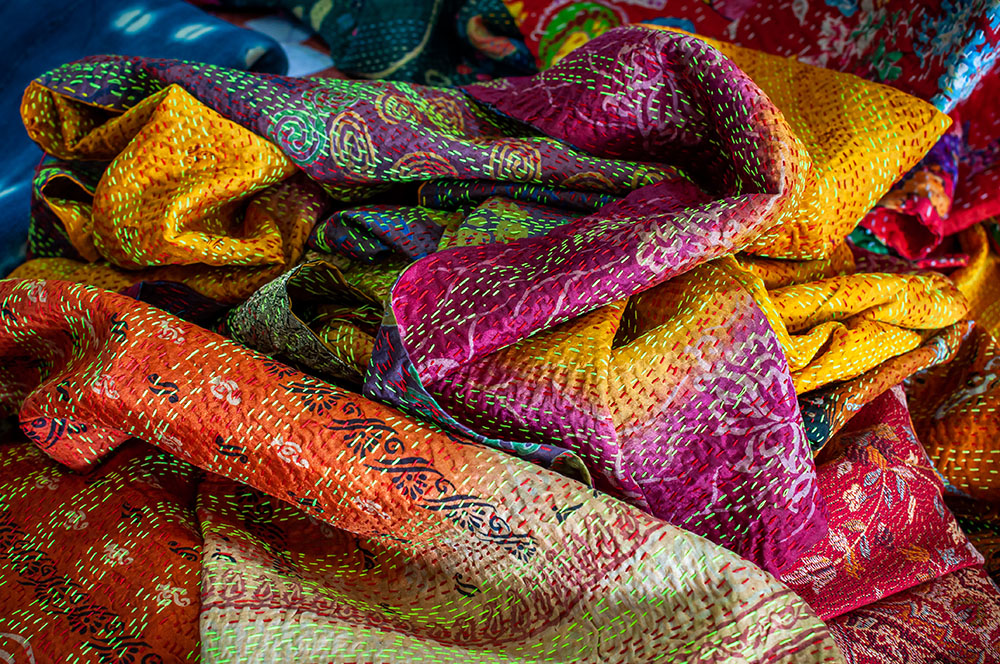
Kantha is an ancient Bengali technique of putting together old scraps of fabric, with a simple stitch, creating a new, unique and vibrant fabric. The first step is to learn to understand ourselves and to see our habits and patterns. Prea sees each of us as a rich tapestry, woven together based on all of our life experiences. For the most part we are a result of what our primary parent figures modelled for us; and all the strategies we created along the way to cope and survive and succeed. Every time we faced a situation that overwhelmed us, that threatened us, that we didn’t understand, that caused us discomfort – an inner knot got created, and then a coping strategy. Over time we tend to be quite unconscious of why we do what we do, we just do it because that’s the way it’s always been done. It becomes an unquestioned habit. Unquestioned to a great extent because we didn’t have the right tools and techniques to do so.
The first ten weeks help us learn a set of techniques that we can use to see our tapestry, see the knots and begin to disentangle the knots. As the knots release we get to consciously put the tapestry back together again.
We start to build awareness of our somatic, limbic and mental systems. We build our capacity to observe and be fully present. As we learn to be present with ourselves, that builds our capacity for perspective, and to see our inner knots.
The Kintsugi Method
Cultivating the inner art of dialogue and decision making
Why Kintsugi ?
Kintsugi is an ancient Japanese art of mending cracks with gold that teaches us that if we choose to embrace our struggles and repair ourselves with love, we become more beautiful for having been broken. Whether the cracks are real or perceived, the process of allowing ourselves to see, hold, and give these uncomfortable aspects of ourselves the space to breathe and exist, doesn’t just cause inner shifts, but impacts the world.
We learn to make healthy decisions even in emotionally charged situations. We learn to create safety for ourselves, so that we can identify our needs and articulate them, in all settings, especially the most crucial.
As we learn to witness ourselves, we can begin to isolate and meet the different voices in our head, and get to know them. Rather than avoiding, suppressing, or distracting ourselves from difficult emotions, thoughts and sensations, we instead learn to meet them and dialogue with them. As we embrace this innate duality in us, aspects that felt fragmented, can now be integrated, in a very organic manner.
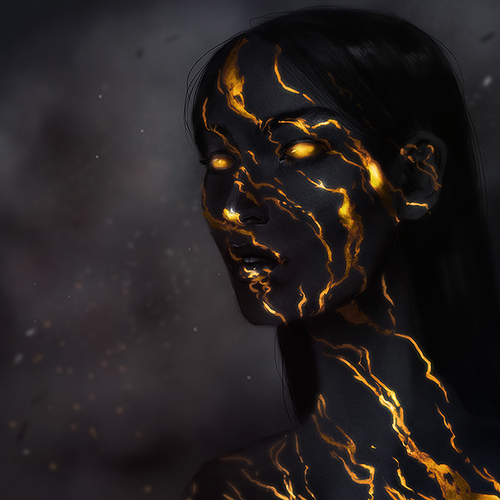
Katarzyna Madej | illustrator/2d artist
– the japanese art of repairing broken pottery with lacquer dusted or mixed with powdered gold
The Ankara Design
Bringing it all together. Building meaningful connection; cultivating a winning communication style
Why Ankara?
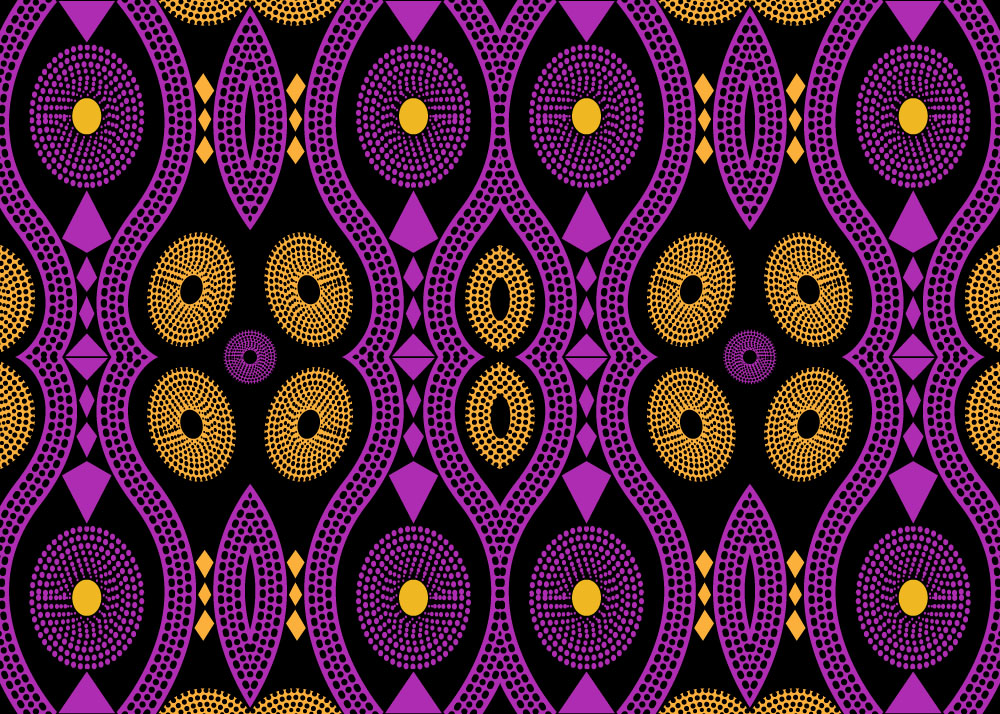
Ankara is a term to describe the gorgeous West African textiles made with wax printing. Each print tells a story, often the simplest of stories are told with the most vivid of colours. We see Ankara, as representative of our stories, and as we embrace every aspect of us, we can learn to celebrate ourselves.
We no longer have to hide from ourselves. We create our narrative, our stories, we are actually in power, but we are often brought up to think that we have none; or that our worth is determined by those outside us; or that in order to survive and thrive, we have to hide and cut off parts of ourselves. We yearn to be seen, loved and understood, just as we are, that is our deepest of desires, that we are wanted for who we really are.
In these ten weeks we focus on building deeply meaningful relationships and connections. We look at how to take all the tools we learnt in the earlier weeks, and apply them in our functioning with others. It is in our relationships with others that we heal and thrive. But as we can learn to relate from a place where we are deeply anchored to our own worth, we can start to have the kind of relationships with others that are deeply fulfilling.

